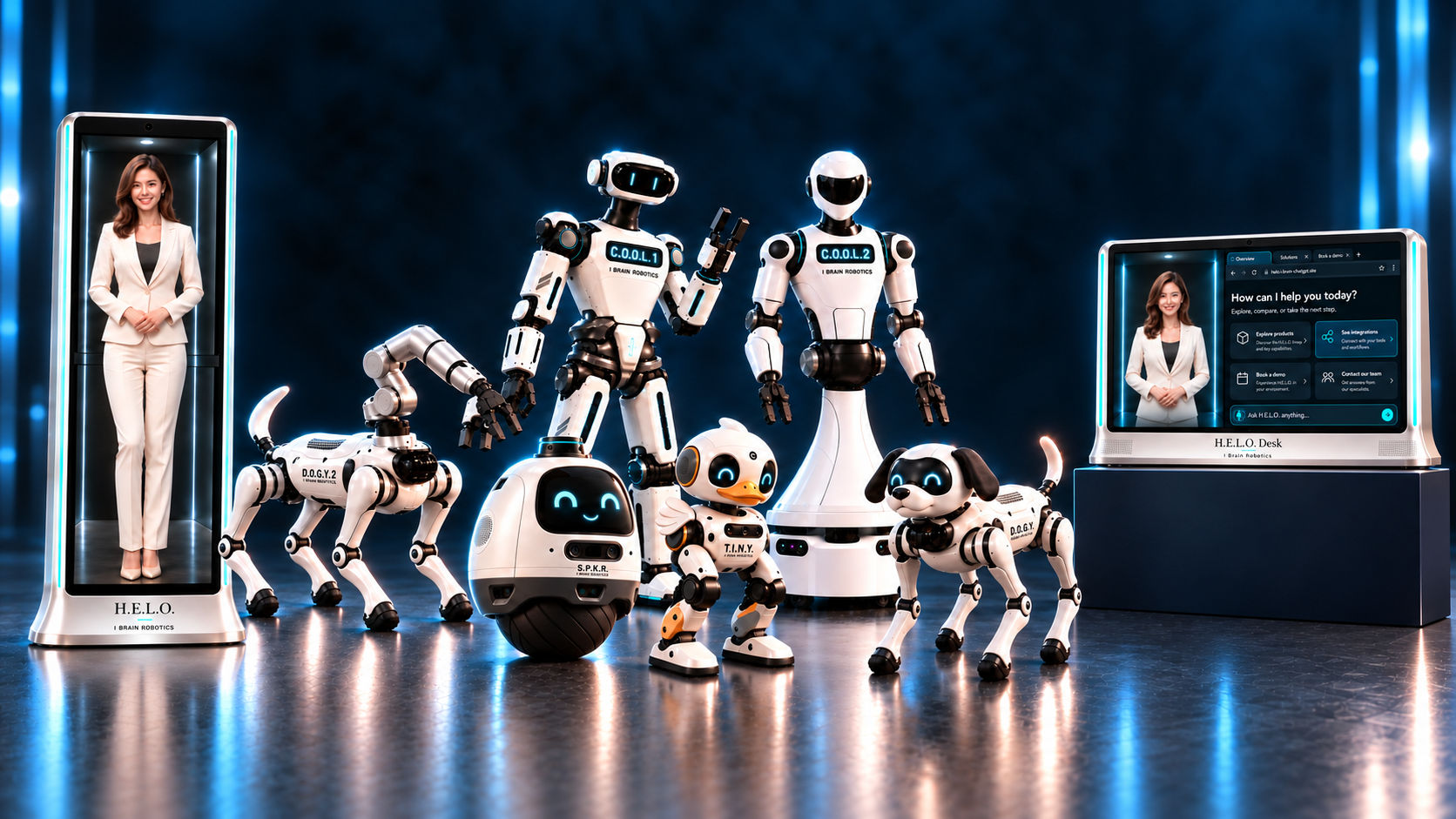
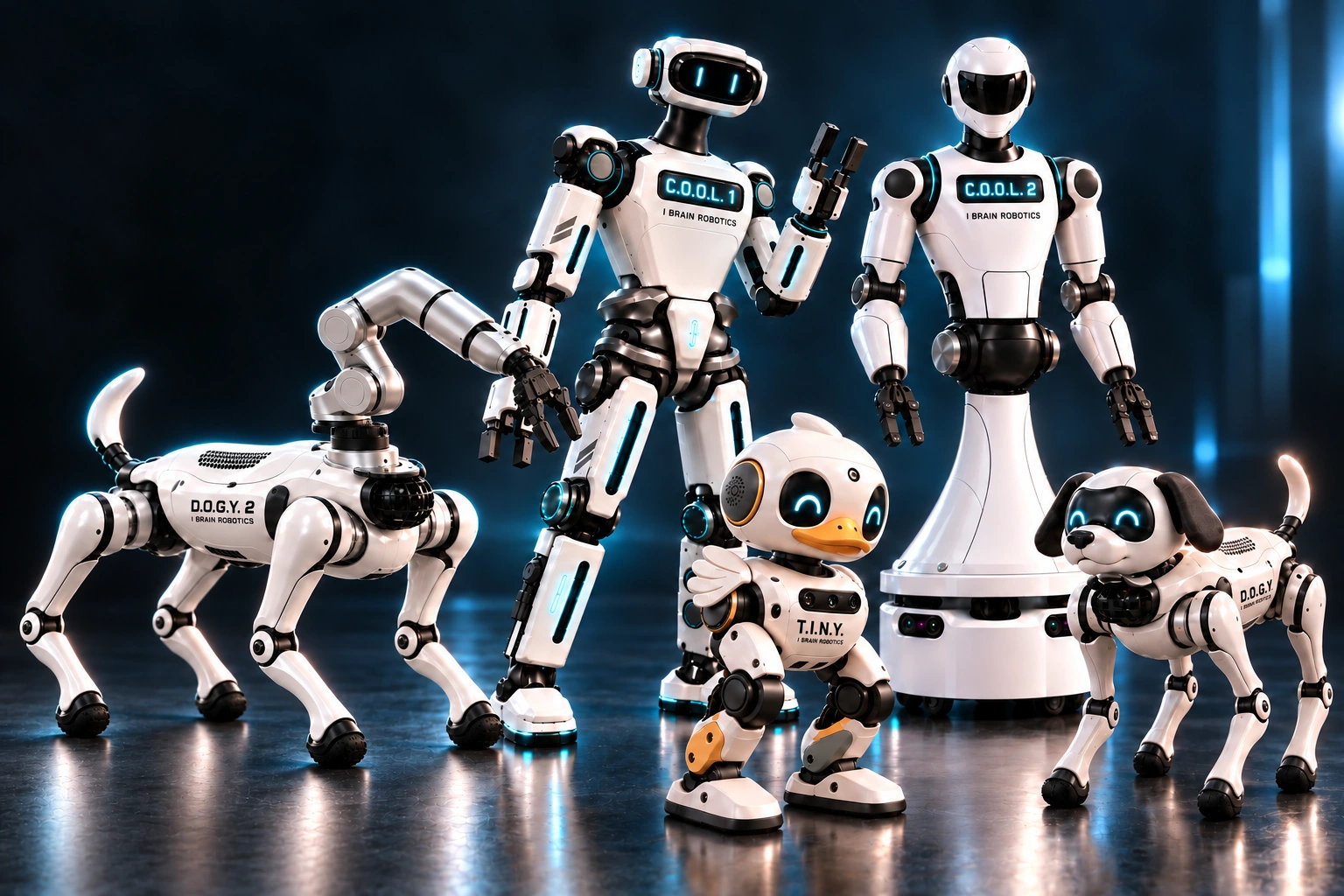
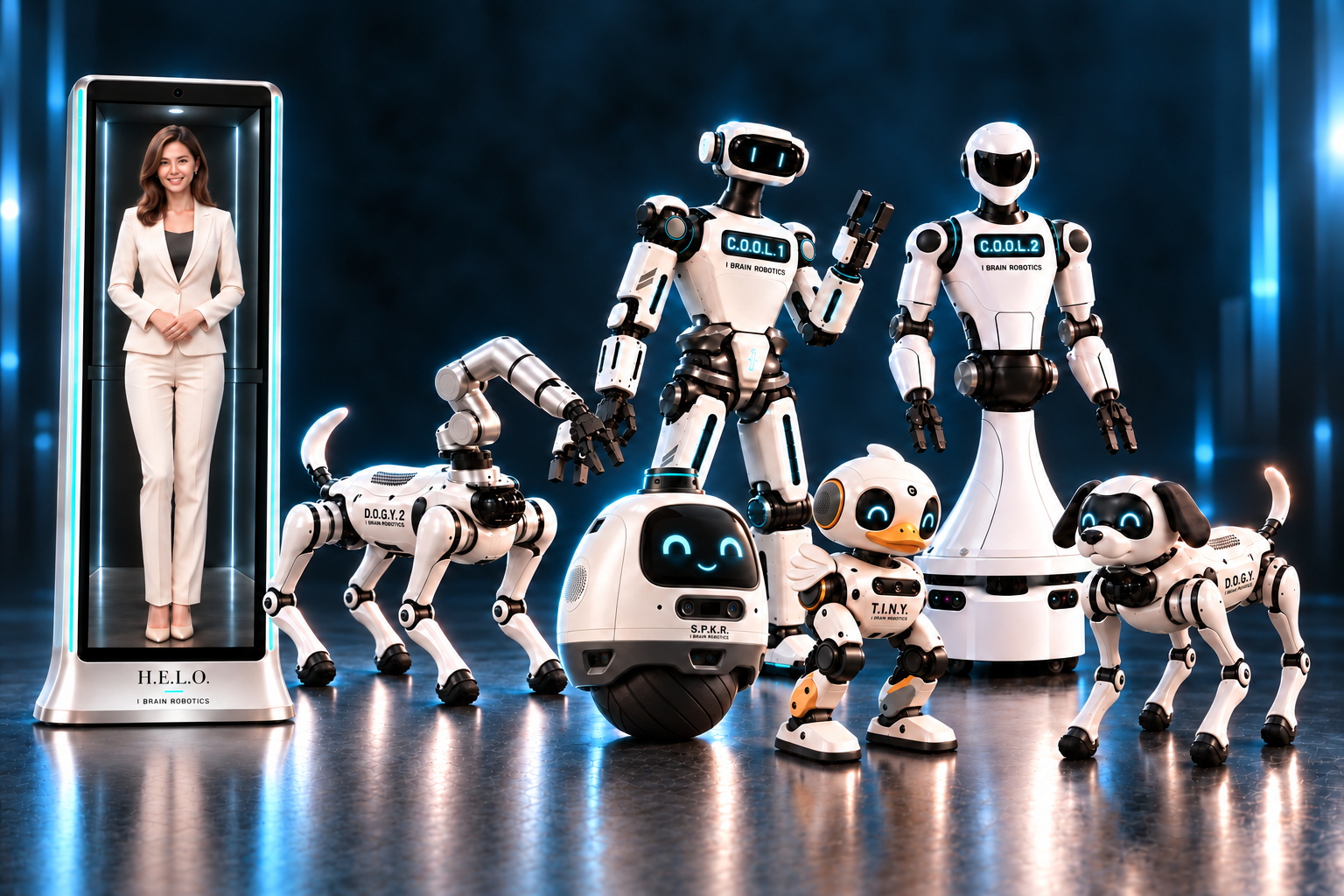
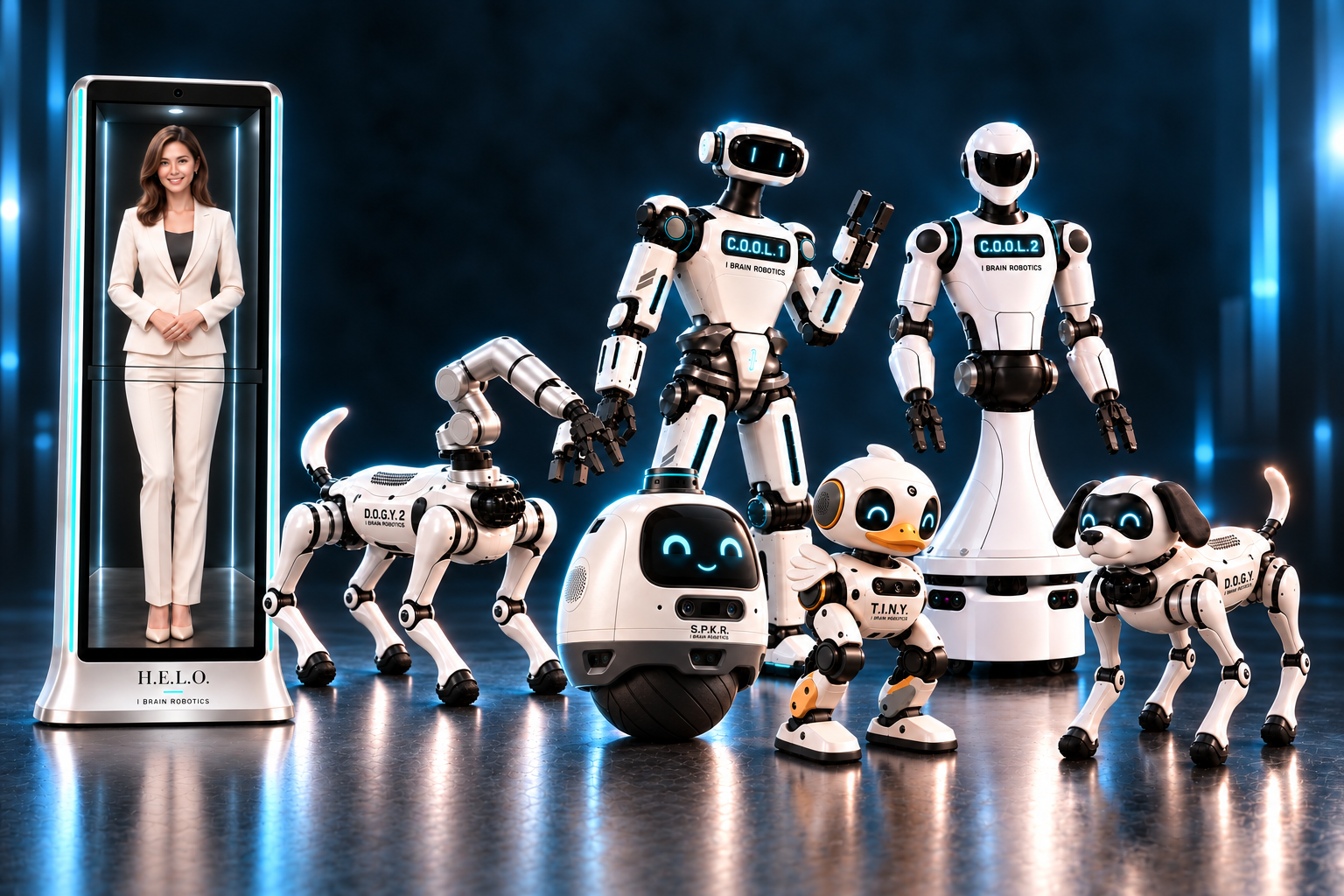
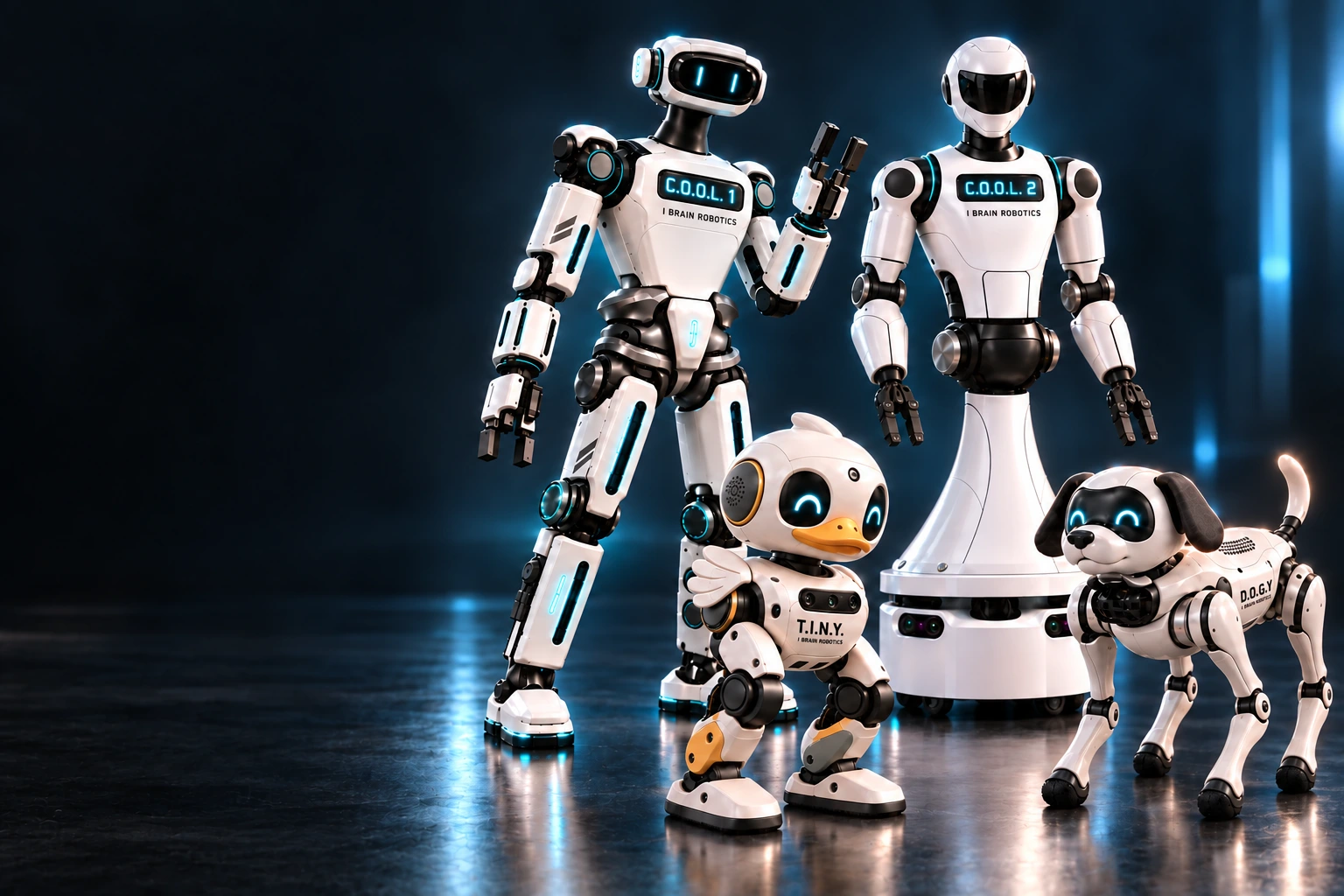
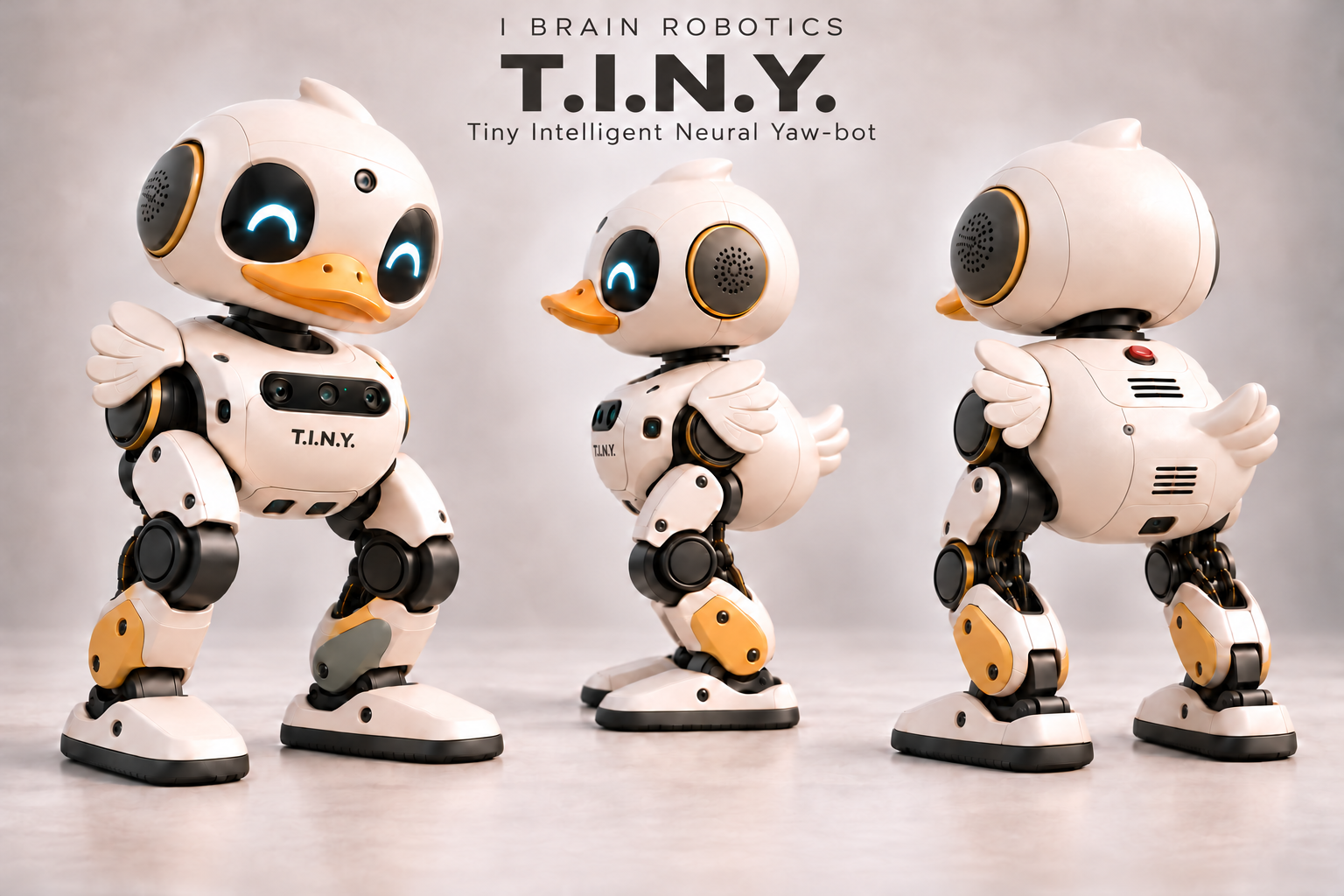
A duck, from every angle
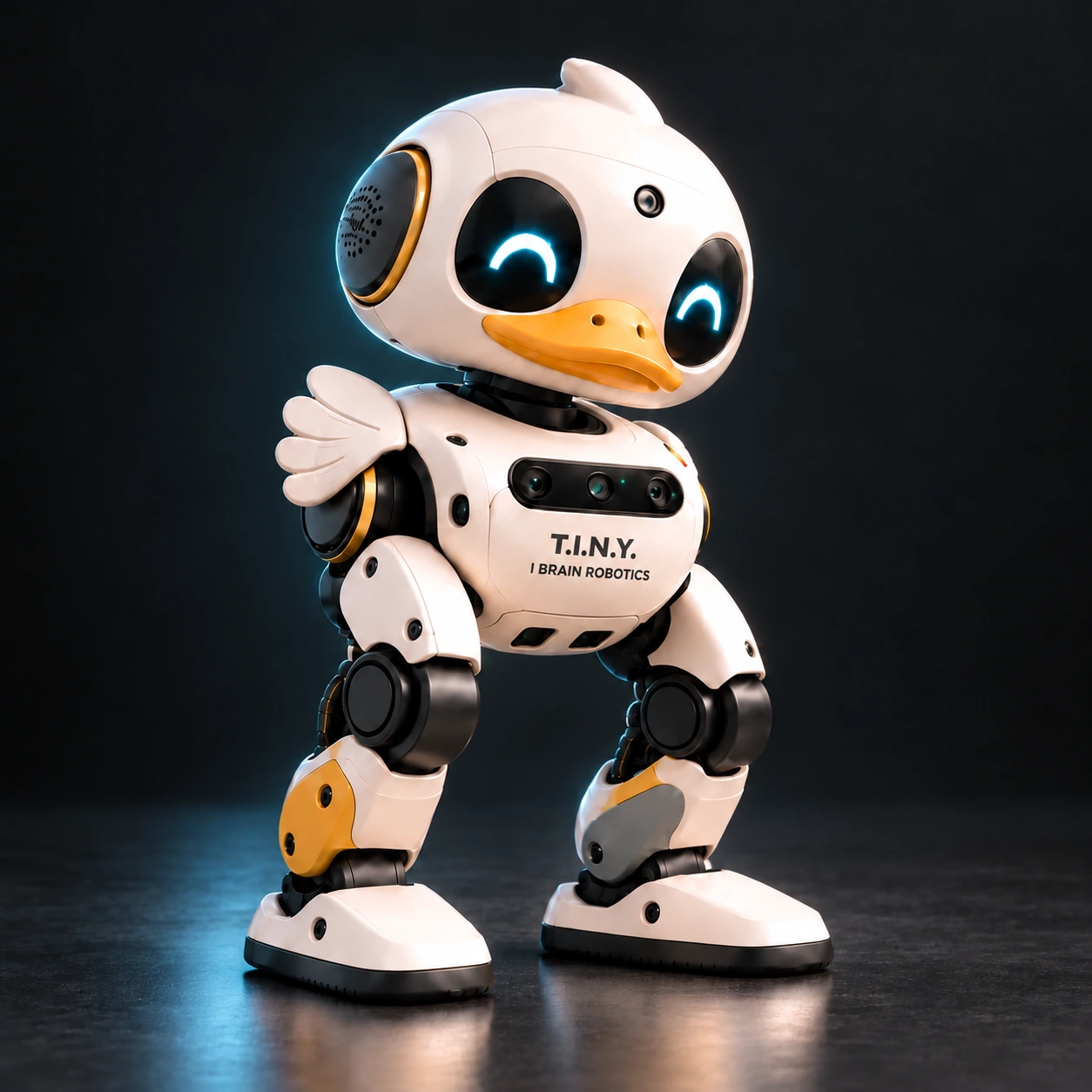
The face, rounded back, small static feather details and tail create a coherent character. T.I.N.Y. is designed to feel recognizable from the front, side and rear.
 Book a Demo
T.I.N.Y.
Tiny Intelligent Neural Yaw-bot
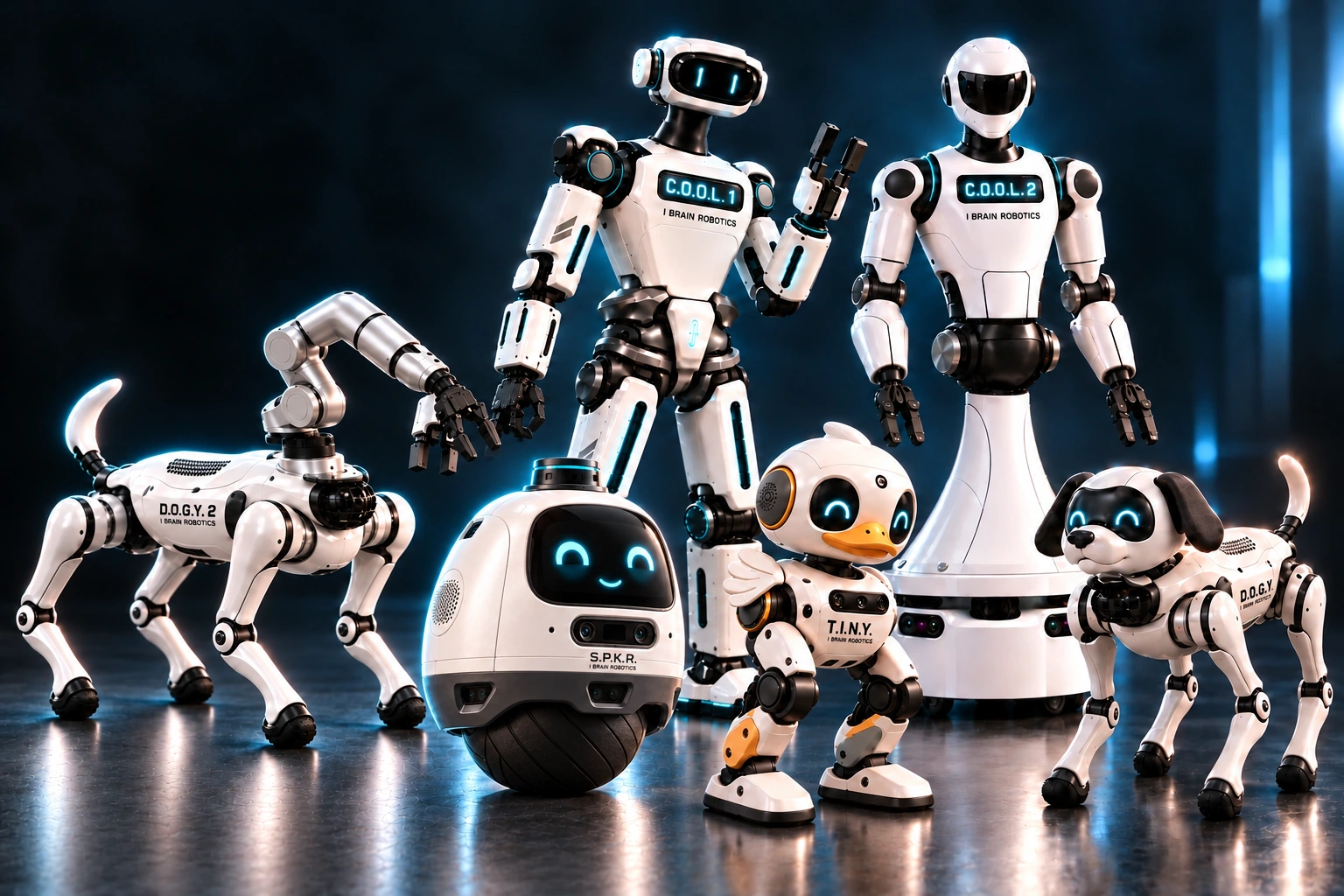
A duck-inspired robot that turns movement into personality. T.I.N.Y. combines a compact bipedal stance with a sculpted beak, expressive eyes and feather-like details for a playful introduction to robotics.
 I BRAIN ROBOTICS / T.I.N.Y.
T.I.N.Y. has a character of its own.
Discover what makes it unmistakable.
Hardware foundations and a clear development direction, brought together in one robot.
Duck face, curved back and static feather details
Biped locomotion and skating direction
Sensor, movement and control demonstrations
Perception and navigation configuration
Explore the intended applications.
Help shape a pilot around your space and goals.
A tangible way to introduce balance, sensors, control and the relationship between code and physical behavior.
Discuss this applicationA compact character for experimenting with expressive sequences, interactive demonstrations and robotics projects.
Discuss this applicationA companion concept built around small interactions and distinctive movement, with the final software experience still being developed.
Discuss this applicationApplication concepts describe intended uses. Supported tasks and operating environments will be defined through validation.
T.I.N.Y.’s final hardware selection is not yet consolidated. Microduck is a relevant published skating-biped reference, but its numerical specifications below are not claimed as final T.I.N.Y. specifications.
| Specification | Detail | Basis |
|---|---|---|
| Form factor | Compact bipedal duck-inspired robot | Design architecture |
| Locomotion direction | Walking and skating configurations | Product direction |
| Exterior | Rounded back, beak, tail and static feather details | Design direction |
| Expression | Cyan illuminated eye treatment | Design direction |
| Reference height | 25 cm / approximately 9.8 in | Microduck reference only |
| Reference mass | Approximately 800 g / 1.8 lb | Microduck reference only |
| Reference actuation | 15 motors | Microduck reference only |
| Reference sensors | Camera, LiDAR and two IMUs | Microduck reference only |
| Reference control | 50 Hz onboard policy loop | Microduck reference only |
| Reference software | Open-source SDK, simulation and reinforcement learning | Microduck reference only |
| Final T.I.N.Y. dimensions & mass | Dependent on selected hardware and new exterior | Validation pending |
| Final battery & runtime | To be established for the selected configuration | Validation pending |
Skating is part of T.I.N.Y.’s intended movement direction. The gallery currently shows the standard-foot design. Final skate attachments, supported surfaces and behaviors will be confirmed with the selected hardware.
No. T.I.N.Y. is the I Brain Robotics design. Those names refer to distinct robotics projects. The Microduck figures here are explicitly a technical reference, not a claim that every feature is integrated into T.I.N.Y.
Education is an intended use. The final age guidance, supervision requirements, learning activities and software access will be defined for the released product.
Follow its development or tell us about the experience you want to create.
No payment or reservation required.